
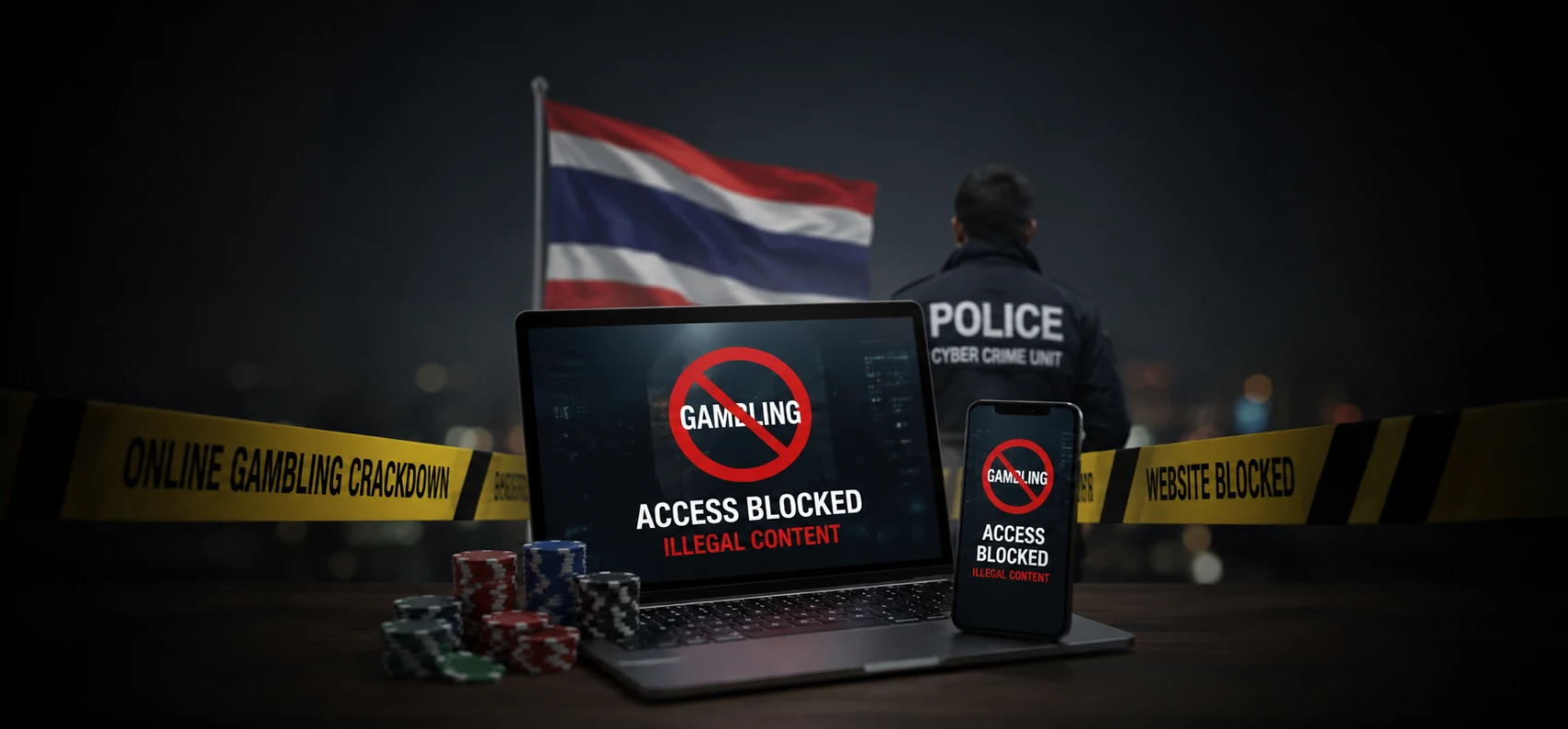
Thailand has blocked more than 717,000 gambling-related websites and social media pages in a major online crackdown, as police warn that millions of young people are being pulled into digital betting.
The Royal Thai Police said authorities blocked 717,425 URLs between 1 October 2025 and 20 May 2026. The takedowns covered websites as well as social media platforms including Facebook, Line and TikTok.
The numbers are big enough to make the usual “just block the site” answer look thin. Thailand is not dealing with one illegal operator or one bad advertising network. It is fighting a fast-moving online ecosystem that can rebuild links, reopen pages and shift users to new channels almost as quickly as enforcement teams shut them down.
Police also cited data showing more than 4 million Thai Gen Z users aged 15 to 25 had entered online gambling by early 2026. Many were reportedly new gamblers, which makes the timing especially worrying ahead of the FIFA World Cup.
Major football tournaments are always a gift to betting operators. Matches come thick and fast, social chatter spikes, casual fans pay more attention, and gambling content can ride the excitement. For illegal operators, the World Cup is not only a sports event. It is a customer acquisition window.
Thai authorities say the crackdown is now focusing on the wider gambling network, not just individual websites. Police have targeted hundreds of online gambling sites for investigation during May and June, with some suspects already arrested and more warrants expected.
That approach matters because illegal gambling does not survive on a website alone. It needs payment channels, social media pages, influencers, customer service accounts, referral systems and people willing to keep the operation moving when one piece is blocked. Cut only the front-end site, and the business may simply reappear under a new name.
Illegal Gambling Is No Longer Just a Website Problem

The social media angle is the one Australian regulators will recognise immediately. Offshore casino and betting brands are no longer relying only on obvious gambling websites. They use short videos, livestreams, influencers, private groups, messaging apps and quick-turnaround promotions. Gambling content can look like entertainment, a life hack or a casual recommendation before the link appears.
Thailand’s police have warned that influencers and short-form video content are being used to attract younger users. That is a serious concern because younger audiences are less likely to separate paid promotion from ordinary content, especially when the pitch comes from someone they already follow.
Australia is facing a similar shape of problem, even if the legal system is different. ACMA regularly blocks illegal offshore gambling sites targeting Australians, while state regulators are paying more attention to gambling promotion through influencers and social media. The old model of gambling advertising was easier to spot: TV ad, jersey logo, stadium sign. The new model can be a podcast comment, a giveaway or a creator showing a “win” on a phone screen.
That makes enforcement harder and slower. A TV ad leaves a cleaner trail. A social media story may disappear within 24 hours. A gambling page can switch handles. A mirror site can replace a blocked domain. By the time one link is gone, another may already be circulating.
The Thai figures also show why enforcement alone can struggle. Blocking 717,425 gambling URLs and pages sounds huge, and it is. But the number also says something uncomfortable about supply. Illegal gambling content is cheap to create, easy to distribute and difficult to remove permanently.
Payment methods add another layer. Thai authorities have warned that operators are adapting their financial systems, including moving away from traditional mule accounts towards corporate accounts, international intermediaries and cryptocurrency channels. That makes investigations more complex and pushes enforcement beyond website takedowns.
For Australia, the lesson is not that Thailand has found the perfect answer. It has not. The lesson is that illegal online gambling is becoming a cross-platform problem. A regulator can block websites, but if the marketing chain stays alive, users can still be pushed towards the next version of the same product.
That is especially important as Australia tightens its own gambling rules. From offshore casino blocking to gambling ad reform and influencer warnings, the direction is clear: regulators are looking beyond operators and towards the people, platforms and payment channels that help them reach customers.
Why the World Cup Creates a Perfect Storm for Illegal Betting

Thailand’s crackdown also highlights the youth-risk problem. A 19-year-old entering online gambling through a TikTok-style clip is not the same as a seasoned punter choosing between licensed betting apps. The path in is softer, faster and often wrapped in entertainment. That makes the harm harder to see until the money is already gone.
The World Cup will test every country’s enforcement system. Legal operators will be chasing customers. Illegal operators will be doing the same, just without the same rules. Thailand is trying to get ahead of that surge by shutting down links and warning promoters before football betting spikes.
Australia should watch closely. The platforms are global, the tactics are familiar, and the operators do not respect borders just because local laws do.
Thailand has blocked more than 700,000 gambling links. The uncomfortable question is how many more are waiting to replace them.