
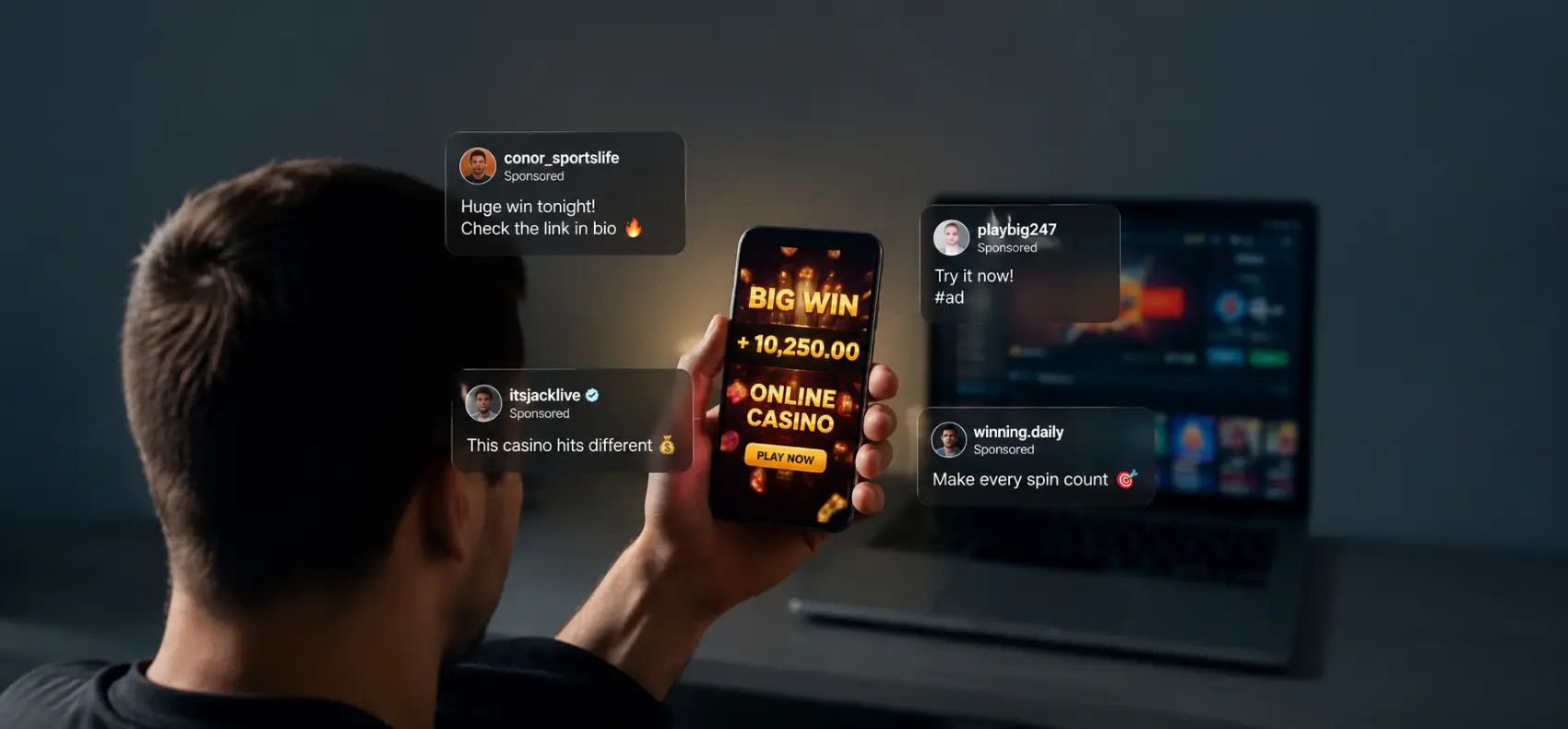
Malaysia has put social media influencers on notice over online gambling promotions, and the warning will sound familiar to anyone watching Australia’s own offshore casino problem.
Consumer groups and legal experts in Malaysia have warned that influencers promoting online gambling platforms could expose themselves to criminal liability. The concern is that gambling content is no longer sitting in the darker corners of the internet. It is being pushed into mainstream social feeds, often dressed up as entertainment, gaming content or easy-money advice.
Federation of Malaysian Consumers Associations vice-president Datuk Indrani Thuraisingham said many content creators may not realise that taking gambling sponsorships could put them at legal risk. She also warned that repeated exposure can normalise gambling among minors and vulnerable users.
How Influencers Make Illegal Gambling Look Mainstream

That is the part Australia should pay attention to. Illegal gambling ads are not always banner ads with flashing casino chips. More often now, they turn up through a podcast mention, a creator’s story, a giveaway, a Telegram group or a “review” page that looks helpful until the affiliate links start doing the real work.
Influencers are useful to gambling operators because they make the pitch feel less like an ad. A paid post from a familiar face can look like a recommendation. A streamer can turn gambling into content. A sports personality can make an offshore casino feel closer to the mainstream than it really is.
Malaysia’s legal problem is also a modern one. Much of its gambling law was written long before social media and online casinos existed. The Common Gaming Houses Act 1953 and Betting Act 1953 are still part of the legal landscape, while authorities have also used the Communications and Multimedia Act 1998 to deal with digital gambling content.
Lawyer Joshua Kong said clearer laws are needed so authorities have better tools to stop online gambling promotions. His point was blunt: old laws are being asked to police internet-era gambling.
Deputy Communications Minister Teo Nie Ching has also warned that promoting online gambling platforms could be an offence under existing laws. She cited provisions covering promotion or encouragement of gambling and said authorities have stepped up cooperation between the Malaysian Communications and Multimedia Commission and police to remove gambling-related material from social media.
The platform side is just as important. Malaysian officials have previously pushed Meta over illegal iGaming ads on Facebook. Communications Minister Fahmi Fadzil said most content taken down on Facebook involved online gambling ads and gambling-related posts, and criticised the platform for not blocking accounts paying for illegal gambling ads by credit card.
That complaint could be made in several countries. Regulators can warn influencers and chase operators, but if the biggest social platforms do not move quickly, illegal gambling content keeps slipping through. A post can vanish, reappear under another account, or drive users to a new link before enforcement catches up.
Why Australia Faces the Same Social Media Risk

Australia is dealing with the same shape of problem. Online casino-style gambling is illegal for Australian customers, and ACMA regularly blocks offshore sites that target the market. Yet illegal casino brands can still reach players through social media, affiliate pages and public figures. A block list helps, but it does not stop a creator from sending followers to a fresh mirror site.
The recent Australian concern over former AFL players allegedly promoting an offshore casino shows how quickly this can move from fringe content into sports culture. Malaysia’s warning fits the same pattern: gambling operators are using trusted online personalities to soften the edge of an illegal product.
For influencers, the lesson is simple. Gambling sponsorships need more due diligence than a discount code or a protein powder ad. They need to know whether the operator is legal in the market they are targeting, whether the product can be offered there, and whether the promotion could be seen as encouraging illegal gambling.
For regulators, the harder job is speed. Social media gambling content moves faster than court processes and takedown notices. By the time a regulator acts, the audience may already have clicked, deposited or followed the next account.
Malaysia’s warning is not just a local story. It is part of a wider shift in online gambling enforcement, where the marketing chain matters almost as much as the operator. Affiliates, influencers, platforms and payment tools all help illegal gambling reach users.
Australia’s debate is heading the same way. The next big gambling ad fight may not be about a TV spot during sport. It may be about a familiar face on a phone screen, making an offshore casino look like harmless content.