
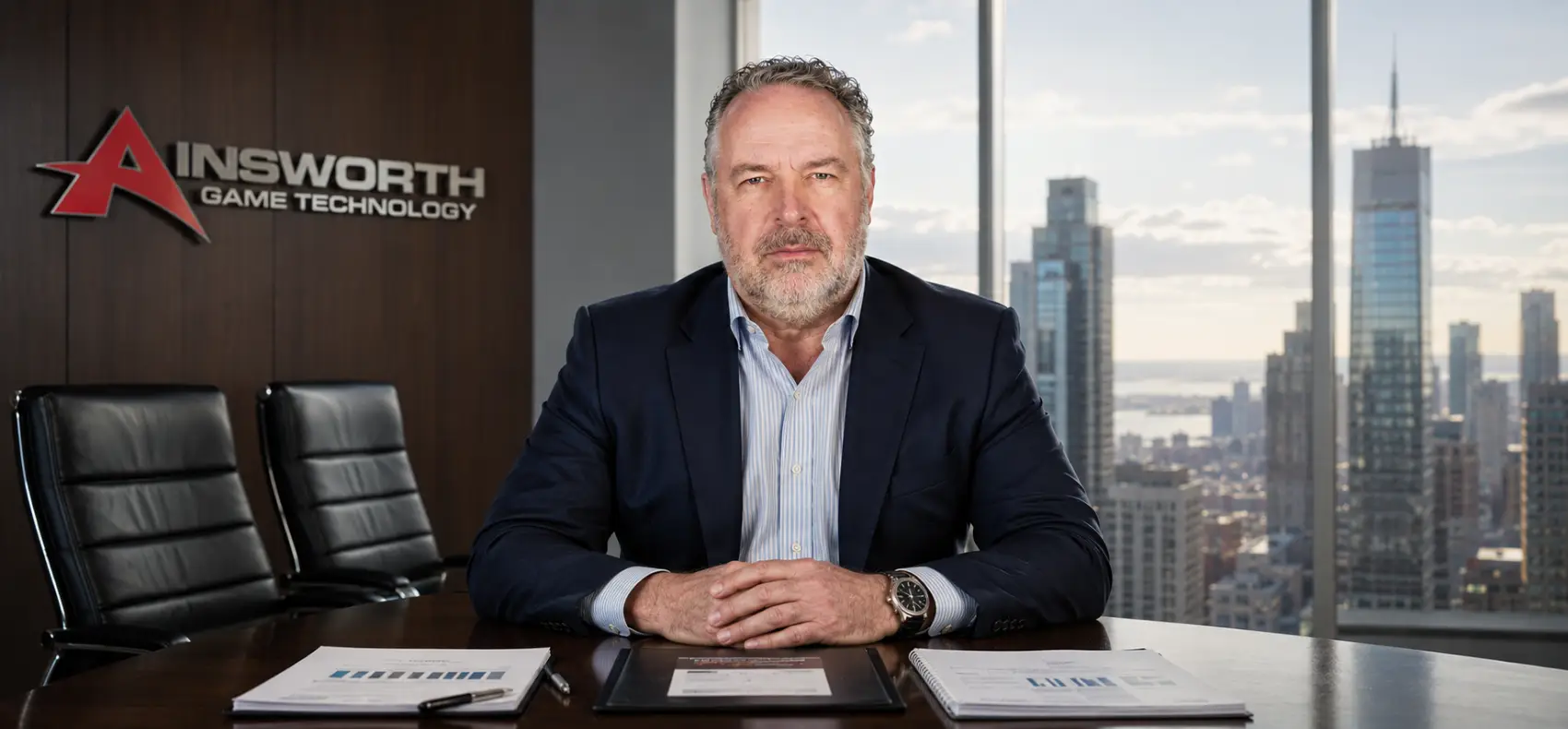
Kjerulf Ainsworth has strengthened his position at Ainsworth Game Technology, keeping alive a long-running fight over the future of one of Australia’s best-known gaming machine suppliers.
Ainsworth Game Technology told the ASX on 5 May that Kjerulf David Hastings Ainsworth now holds 8.24% of the company’s voting power after the close of his proportional takeover offer. The offer closed at 7pm Sydney time on 27 April and sought to acquire 5.5% of each shareholder’s ordinary shares not already owned by him.
That makes him the company’s second-largest shareholder. Novomatic remains firmly in control with 67.39% of issued shares, but the Austrian gaming giant still does not have the 75% stake it would need to take Ainsworth private on its own.
Why Kjerulf’s Bigger Stake Matters

For a company that makes gaming machines and related systems for casinos and venues around the world, this is not just a family shareholding story. It is a control story, and a stubborn one.
Kjerulf is the sixth son of Len Ainsworth, who founded Ainsworth Game Technology after building Aristocrat into one of Australia’s major gaming names. He does not hold an executive role at AGT, but he has become one of the loudest minority voices pushing back against Novomatic’s attempts to tighten control.
His latest offer was priced at A$1.30 per share, the same level as an earlier proportional offer and well above Novomatic’s A$1.00-per-share bid. When Kjerulf announced the March offer, AGBrief reported that the price represented a 23.8% premium to AGT’s 10 March closing share price and a 23.5% premium to its 30-day volume-weighted average price.
The board’s independent committee later backed the 5.5% offer, describing the price as an acceptable premium. NEXT.io reported that the bid could have lifted Kjerulf’s stake to about 13.25% if fully accepted, strengthening his position as the main minority counterweight to Novomatic.
It did not get him that far. Even so, 8.24% is enough to keep him relevant in a company where the remaining free float is thin and almost every percentage point matters.
The broader takeover fight has been running for months. Novomatic tried to buy the shares it did not already own for A$1.00 each, but its offer lapsed on 6 February after failing to reach the level needed to take AGT private. SiGMA reported that Novomatic’s position was about 67.4% at the time, short of the 75% threshold.
Kjerulf has argued that Novomatic’s offer undervalued the company. His own proportional bids gave minority shareholders a chance to sell part of their holding at a higher price while keeping exposure to any future upside. That structure is important: it lets shareholders take some cash without fully exiting the story.
Governance Fight Moves Into Focus

Now the fight shifts from takeover mechanics to governance.
AGBrief reported that Kjerulf has raised concerns over board structure, shareholder rights and capital management. He has also signalled support for tighter director remuneration and disclosure requirements, opposed the renewal of proportional takeover provisions, and nominated former chief executive Lawrence Levy as an independent non-executive director, with a view to later backing him as chairman.
He has also flagged changes to the constitution that would mandate dividend payments, pointing to the fact that Ainsworth has not paid dividends since October 2018 despite reporting growth.
That dividend point will resonate with some minority shareholders. A company controlled by one large shareholder but still listed can leave smaller investors in an awkward position. They may not have enough influence to steer strategy, but they still carry exposure to the company’s performance, capital decisions and market liquidity.
Novomatic, for its part, remains the controlling shareholder and has held a majority stake since 2018. It may have failed to take AGT private this time, but it has not lost control of the boardroom arithmetic. The question is whether Kjerulf’s larger stake makes that control harder to use without a fight.
For the Australian gaming sector, the AGT tussle is also a reminder that suppliers can have their own dramas away from casino floors and regulatory inquiries. Product performance, shareholder control, takeover premiums and dividend policy can all become flashpoints, especially in companies tied to well-known founding families.
AGT is not a giant like Aristocrat, but it still carries a name with weight in Australian gaming. That makes the ownership fight more interesting than a routine share register update.
Kjerulf Ainsworth has not stopped Novomatic from controlling the company. But he has made it harder for the majority owner to finish the job quietly.
For minority shareholders, that may be the point.