
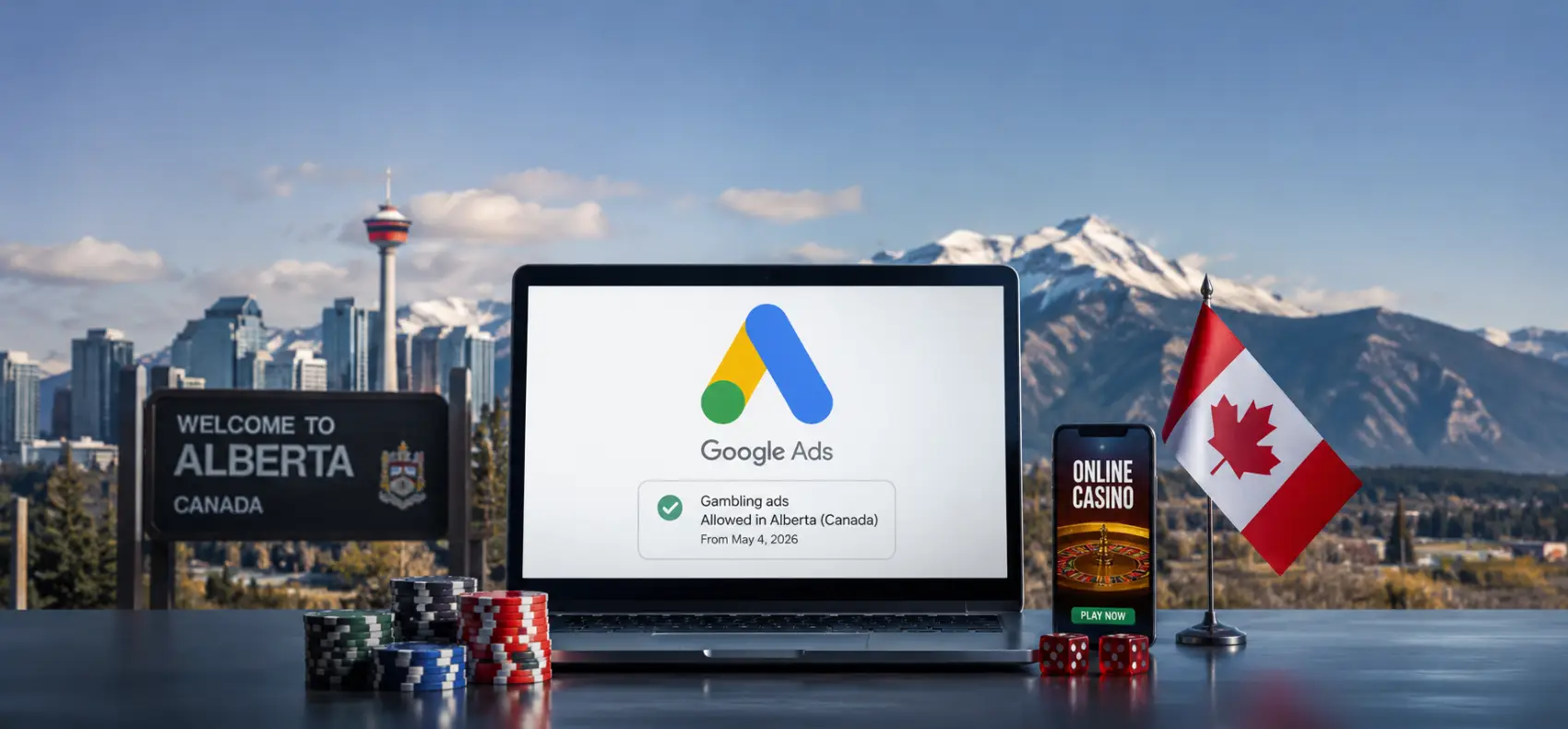
Google has cleared the way for licensed Alberta iGaming operators to advertise online, giving the province’s incoming regulated market one of the most important tools it needs before launch.
From 4 May 2026, Google Ads updated its gambling and games policy to allow online gambling advertisements in Alberta for entities authorised by Alberta Gaming, Liquor and Cannabis. Operators still need Google certification, and the permission only applies where the advertiser is allowed under local rules.
That sounds like a technical policy update. It is more than that.
Alberta is preparing to open a competitive online gambling market on 13 July, moving beyond its government-run Play Alberta model and allowing private operators into regulated online casino and sports betting. The province will become Canada’s second major open iGaming market after Ontario.
Why Google Access Matters for Alberta’s Legal Market

For operators, Google access matters because search is often where player behaviour begins. A customer looking for a sportsbook, casino app, bonus offer or legal betting site may not go straight to a regulator’s website. They are more likely to search, compare and click. If licensed operators can show up clearly in that process, Alberta has a better chance of steering players towards the legal market.
That is the channelisation argument in plain clothes. Alberta says about 70% of its current iGaming market is captured by unregulated operators. The new framework is designed to bring that activity into a supervised system, with licensed companies, local oversight, tax contributions and social responsibility funding.
Advertising is part of that shift. A legal market that nobody can find will struggle to beat offshore sites that players already know. But gambling ads are also where regulated markets can get messy fast. Too little visibility and the grey market keeps its hold. Too much visibility and the new market starts to look like a public invitation to gamble more.
Google’s policy change sits right in the middle of that tension.
The platform is not opening the door to every operator with a landing page and a budget. Its policy says gambling advertisers must be properly authorised and certified. That gives regulators and platforms a shared filtering role: Alberta decides who can legally operate, and Google decides who can advertise through its system.
That still leaves plenty of room for mistakes. Gambling advertising is not just about legal status. It is about targeting, wording, age controls, landing pages and whether promotions make risk look smaller than it is. Search ads can be sharp and direct. That is useful for licensed operators, but it also means compliance teams need to be awake before campaigns go live, not after screenshots start moving around social media.
Pre-Launch Advertising Creates Both Opportunity and Risk

Alberta has already allowed operators in the registration process to advertise and sign up prospective customers, but not to accept deposits or bets before launch. That creates an unusual pre-launch window. Operators can build mailing lists and brand awareness, while customers can get familiar with names that may go live in July.
There is a practical upside to that. A cold market launch can be chaotic. Pre-registration gives operators time to educate customers, explain legal status and prepare accounts before betting begins. It may also help the province move players away from offshore sites faster once the market opens.
The risk is that pre-launch marketing becomes a race for attention before the safeguards are fully visible to ordinary users. The better operators will use the window to explain licensing, responsible gambling tools and legal protections. The more aggressive ones may be tempted to lead with bonuses and urgency. Regulators should assume both types exist.
Australia should watch this closely. The legal settings are different, but the marketing problem is familiar. Australian regulators are trying to push illegal offshore casino operators out of view, while gambling ads around legal betting remain politically sensitive. Alberta is testing whether a licensed market can use major ad channels to compete with grey operators without letting the advertising volume get out of hand.
That balance is not easy. Google can help direct traffic to authorised operators, but it cannot replace gambling regulation. Certification does not decide whether a market is healthy. It only controls who can buy ads on one very large platform.
For Alberta, the policy change is still a useful step. It gives the legal market a cleaner way to be seen before launch and makes it easier for customers to find operators that have gone through the proper process.
The real test comes after 13 July. If Google ads help move players from unregulated sites into licensed channels, Alberta’s channelisation case gets stronger. If the market quickly turns into a wall of bonus-led search ads, critics will have a different story to tell.
A regulated market needs visibility. It also needs restraint. Alberta is about to find out whether it can have both.