

China has warned its citizens in Cambodia to stay away from gambling and online betting, as a new visa-free travel period between the two countries gets under way.
The Chinese Embassy in Cambodia issued the advisory as ordinary Chinese passport holders gained visa-free entry from 15 June to 15 October 2026. Travellers can enter Cambodia multiple times during the period, with each stay capped at 14 days.
The timing is not random. More travel means more movement, more tourism and, from Beijing’s point of view, more risk that Chinese nationals may be pulled into gambling, telecom fraud or illegal work schemes.
Why Beijing Is Warning Travellers Now
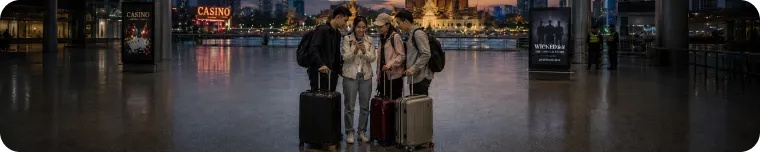
The embassy warned citizens not to take part in online gambling or telecom scams, and not to trust fake “high-salary recruitment” ads. Those recruitment offers have become a familiar red flag across parts of Southeast Asia, where illegal scam compounds and gambling-linked fraud networks have trapped or exploited workers.
Cambodia sits at the centre of that concern. The country banned the issuing of new online gambling licences in 2019, with the ban taking full effect in 2020. Its land-based casino sector legally serves foreign patrons, but the wider gambling and scam ecosystem has faced heavy scrutiny in recent years.
Authorities in Cambodia have continued raids and closures tied to suspected illegal gambling and fraud operations. According to the AGBrief report, officials say they have closed 91 casinos and raided more than 250 suspected scam centres since mid-2025.
Why Australia Should Watch the Regional Pattern

For Australia, the story is not only about China and Cambodia. It is another example of how gambling, online fraud and cross-border travel are becoming tangled together in Asia-Pacific enforcement.
Illegal gambling is no longer just a player clicking on a shady casino site. In some markets, it sits alongside payment fraud, fake job ads, human trafficking risks, unlawful detention and cybercrime. That makes it much harder for regulators to treat gambling enforcement as a narrow consumer-protection issue.
Australia has its own version of the problem, though on a different scale. ACMA keeps blocking offshore gambling sites that target Australian customers, while regulators warn that illegal operators do not offer the same protections as licensed services. The local debate often focuses on player risk: unpaid winnings, locked accounts, weak dispute resolution and harmful marketing.
The Cambodia warning shows the darker regional edge. In parts of Southeast Asia, illegal online gambling can be connected to organised fraud networks, not just unlicensed entertainment.
China has issued similar warnings before, including around Lunar New Year travel. Chinese missions in Singapore, South Korea and the Philippines have reminded citizens to avoid gambling overseas, even where casinos are legal locally. Beijing’s position is blunt: Chinese citizens are barred from gambling abroad under Chinese law.
That creates a strange tourism tension. Countries like Cambodia want visitors and investment. Casino zones have long been part of the regional tourism and entertainment mix. China, meanwhile, does not want its citizens feeding offshore gambling operations or getting trapped in fraud networks.
The new visa-free period should boost travel between China and Cambodia, but the embassy’s message makes clear that Beijing wants movement without gambling spillover. Visitors are being told to enjoy the trip, not the tables.
For gambling operators and regulators, the broader lesson is simple. Travel rules, casino policy, online enforcement and scam prevention are no longer separate stories. They keep running into each other.
Australia should watch that pattern. Offshore gambling operators targeting Australians are often based far from local oversight, and the same offshore environment can also host affiliate networks, payment workarounds and other grey-market services. The cleaner the website looks, the easier it is for users to forget where the business actually sits.
China’s warning in Cambodia is not about Australia directly. But it belongs to the same regional picture: governments are trying to keep gambling activity from sliding into criminal networks they cannot easily control.
Visa-free travel may bring more visitors. Beijing is making one thing clear before they arrive: gambling is not part of the package.