
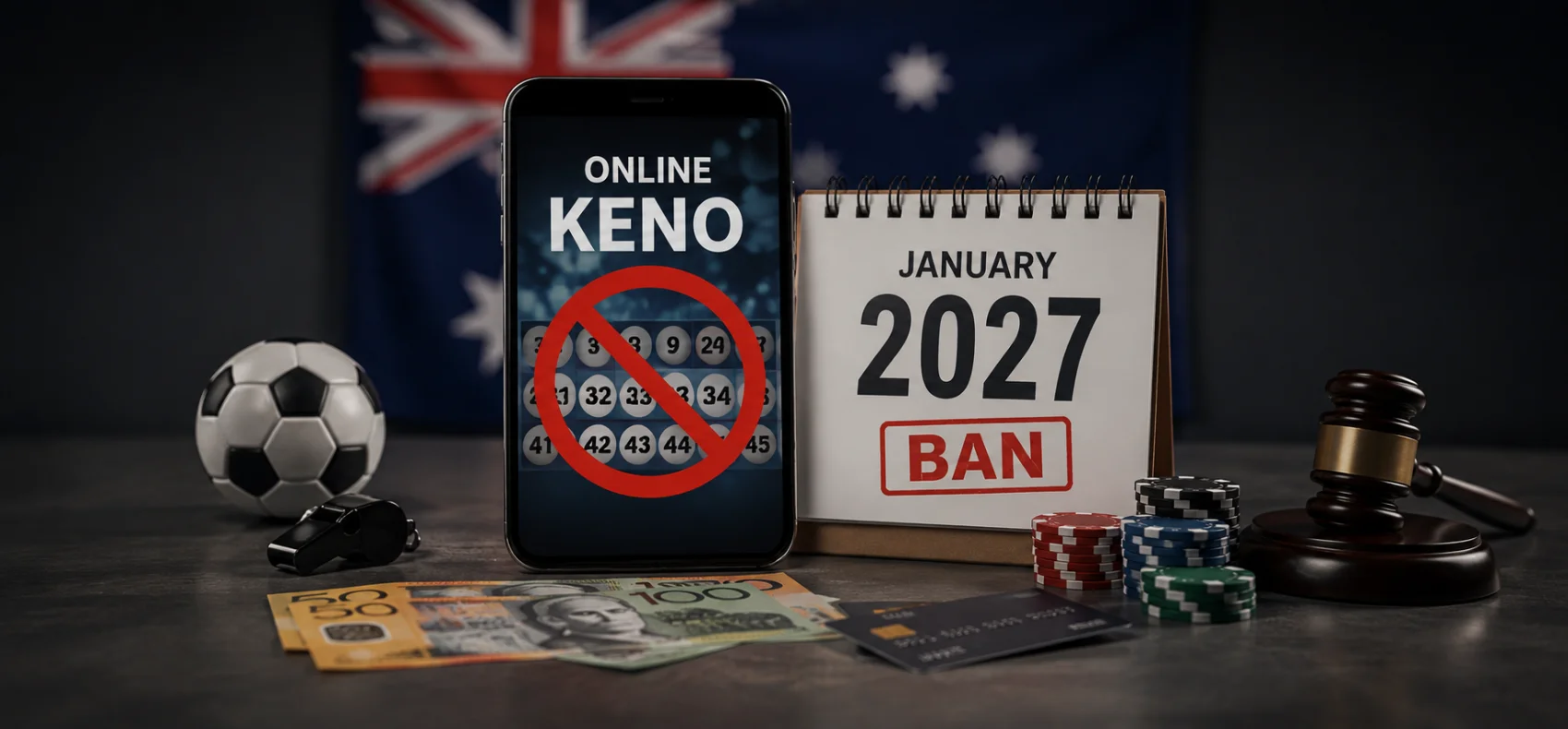
Australia’s online gambling rulebook is getting another rewrite, and this time online keno is directly in the firing line.
The Albanese Government has confirmed a package of gambling reforms due to begin from 1 January 2027, with online keno-style products, emerging lottery models and offshore operators all facing tighter controls. The announcement puts a date on a policy direction that has been building for years: less gambling promotion around sport, fewer grey-area products online, and more pressure on operators that sit outside Australia’s licensing system.
Why Online Keno Became a Key Target

Online keno has been one of the clearest targets. The government has described the product as a form of “pocket pokies”, a phrase that tells players almost everything they need to know about why regulators are worried. It is quick, easy to access and built around repeated play. For a market already dealing with heavy pokies losses, moving that rhythm onto phones was always going to attract political heat.
The ban also closes a gap that has annoyed harm-reduction campaigners. Online keno has not always sat neatly inside the same consumer protection framework as more established wagering products. That means some safeguards familiar in sports betting, such as the national self-exclusion register BetStop and card restrictions, have not applied in the same way. For regulators, that sort of gap is not a technical detail. It is where product design tends to sprint ahead of legislation.
The government is also turning its attention to “shadow lotteries”, a label being used for rewards-style schemes that look less like traditional gambling at first glance. These products can be packaged as membership clubs, promotions or prize-draw programs, but the basic attraction is familiar: pay regularly, stay in the draw and hope for a high-value prize. They have been able to live in a softer regulatory space because they are not always presented as gambling products in the usual sense.
That space is now shrinking. Canberra has said it will examine exemptions currently available to rewards club activities and introduce changes where needed. Foreign-matched lotteries are also under review. These products allow Australians to participate in overseas jackpot draws they would not normally be eligible to enter, often through intermediaries rather than direct entry into the official lottery.
For consumers, the distinction between a licensed local lottery, a foreign-matched product and a prize-club draw can be blurry. That confusion is part of the problem. If a product takes money, offers a chance-based prize and markets the dream of a big win, most customers are not going to read the fine print like a lawyer with a strong coffee and no weekend plans.
Offshore Operators Face More Pressure

The reforms do not stop at product bans. The government says it will work with banks to block payments to illegal offshore gambling operators. ACMA is also expected to get stronger tools to block illegal sites more quickly. That matters because offshore gambling enforcement has often looked like a long game of digital whack-a-mole: one domain is blocked, another appears, and the same operator can be back in front of Australian players under a different URL.
Payment blocking could make that harder. A website block may stop casual traffic, but stopping money movement hits closer to the business model. If players cannot deposit easily, illegal operators lose one of their main advantages: convenience.
The other major plank is advertising. From 2027, gambling ads on broadcast TV will be capped at three per hour between 6am and 8.30pm, with a ban during live sports broadcasts in that window. Radio ads will be banned during school drop-off and pick-up periods. Online platforms will only be able to show gambling ads where users are logged in, over 18 and given an option to opt out.
Sports will feel the change too. Gambling ads are set to be banned in venues and on player and official uniforms. Celebrity and sportsperson appearances in gambling ads will also be prohibited, along with odds-style promotions aimed at fans. The idea is obvious enough: stop betting from looking like part of the match-day uniform.
Still, the package has not satisfied everyone. The late Labor MP Peta Murphy’s parliamentary inquiry called for a much broader gambling advertising ban, and critics argue the government has stopped short of the clean break many families, advocates and crossbench MPs wanted. Guardian Australia reported that the government’s own analysis estimated the proposed ad restrictions would reduce annual gambling spending by just 0.8%, while a full ban was modelled as having a larger effect.
That figure gives opponents an easy line of attack. If the aim is to reduce harm, they ask, why settle for a smaller lever? The government’s answer is balance: reduce exposure, especially for children, without cutting too deeply into media, sport and licensed wagering all at once.
Whether that balance holds will depend on the details of the legislation. Operators will want clarity on product definitions, advertising compliance and payment-blocking obligations. Sports bodies and broadcasters will want transition time. Harm-reduction groups will want proof that the reforms are more than a tidy press conference with a long runway.
For players, the direction is already clear. Australia is not moving towards a looser online casino market. It is moving the other way — less grey area, fewer mobile gambling products that mimic pokies, and more friction for offshore sites trying to reach local customers.
The January 2027 start date gives the industry time to prepare. It also gives critics plenty of time to argue the government should have gone further.