
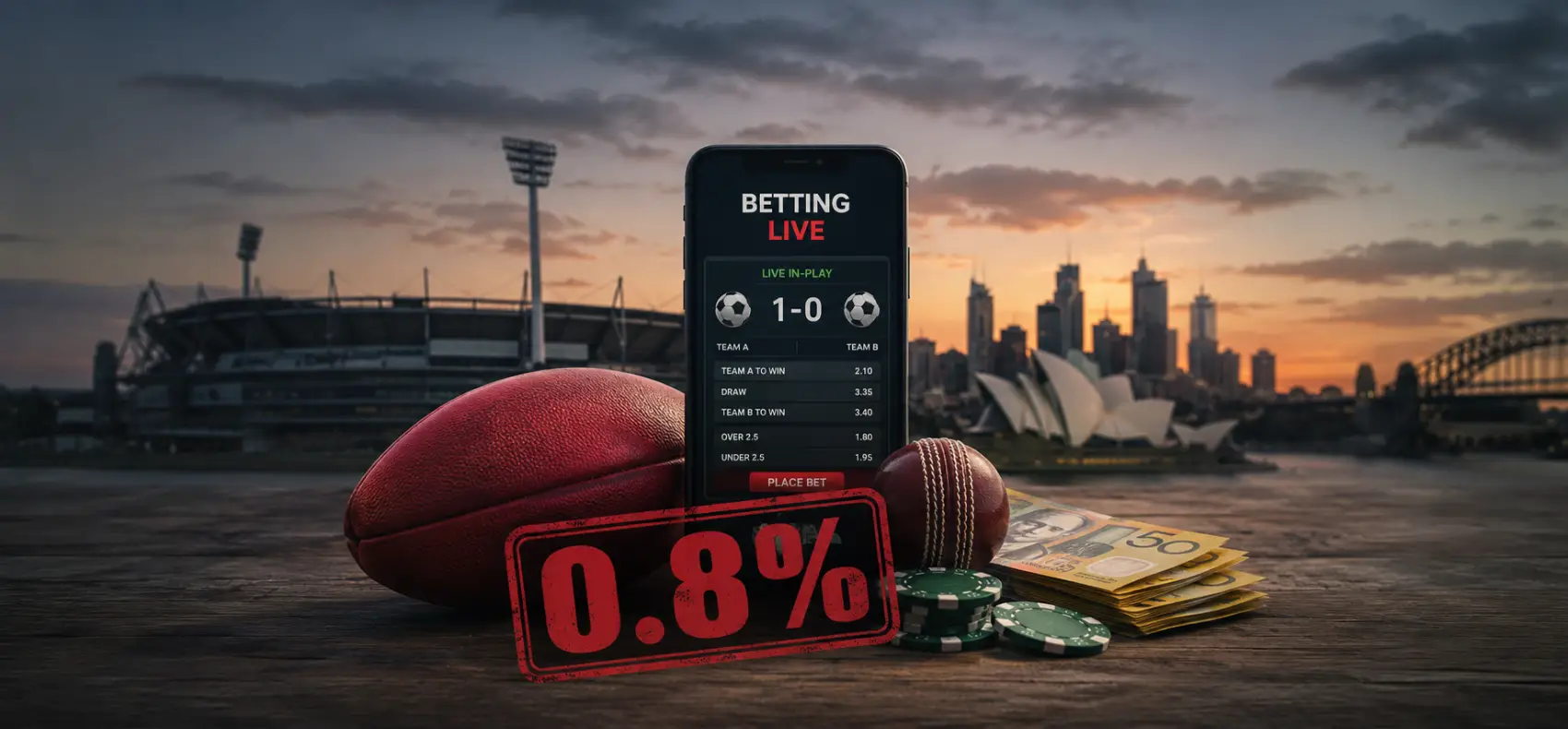
Australia’s new gambling advertising plan has a number problem.
The federal government has pitched its reform package as a major step towards cutting betting’s grip on sport, media and children’s screens. But its own analysis has reportedly put the likely reduction in annual gambling spend at just 0.8%, or about $62.7 million.
That does not make the reforms meaningless. It does make the politics harder.
Prime Minister Anthony Albanese has announced restrictions due to begin in 2027, including a cap of three gambling ads per hour on TV between 6am and 8.30pm, a ban during live sports broadcasts in that window, and radio ad bans during school drop-off and pick-up times. Gambling branding is also set to be removed from sports venues and player uniforms, while celebrity endorsements will be banned.
Online, the government is backing a “triple lock” model. Gambling ads would only be shown to users who are logged in, verified as adults and given a way to opt out. On paper, that sounds tidy. In practice, it is where some of the biggest fights are likely to happen.
Why the 0.8% Figure Makes Reform Harder to Sell

The 0.8% figure gives reform advocates an easy line: if gambling harm is serious enough to justify national reform, why settle for a plan the government’s own modelling says will barely touch overall spend?
A full advertising ban was reportedly modelled as reducing annual gambling spend by 1.4%, or about $109.5 million. That is still not a miracle cure, but it is almost double the expected impact of the government’s chosen path. The Office of Impact Analysis also found a full ban would put more pressure on media and sports sectors, which helps explain why the government has landed on a softer version.
And that, really, is the whole fight in one paragraph.
Australia wants fewer gambling ads. It does not want to blow a hole through sport and media revenue overnight. The betting industry wants to keep advertising. Public health groups want much less of it. Parents are tired of odds being stitched into sport like team colours. Broadcasters would rather the money did not vanish.
Everyone can see the problem. Nobody agrees on how hard to hit it.
The government’s plan is not small. Banning betting brands from jerseys and stadiums will be noticed. So will limits around live sport. For families watching footy or cricket, fewer betting ads during the match will feel different.
But gambling advertising has already spread well beyond the old TV spot. It lives in apps, social feeds, podcasts, affiliate content, influencer mentions, push notifications and sponsored segments that do not always look like traditional ads. That is where critics see the danger. If the most obvious ads are restricted, operators may simply move money into channels that are harder to police.
The Guardian has reported warnings from experts and crossbench MPs that the online model could leave blind spots around podcasts, influencers and social media. The concern is simple enough: if parents and users have to opt out, the system still puts too much responsibility on the audience rather than the advertiser.
That matters because gambling ads do not just sell a product. They normalise a habit.
Visibility May Matter Even If Spending Barely Moves
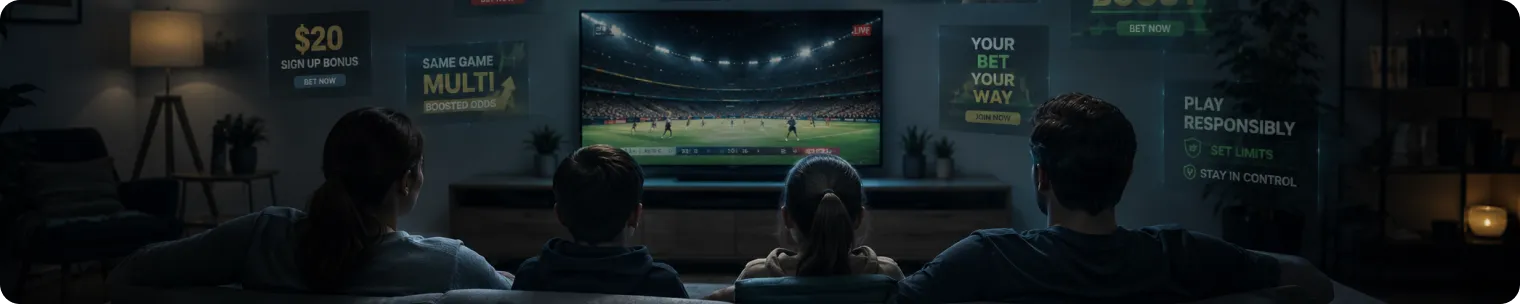
The old defence was that advertising only shifts customers between brands. Sportsbet gets one punter, Ladbrokes loses one, the total market barely moves. The 0.8% modelling gives that argument some oxygen. If spend hardly falls, the industry can say the rules are mostly about visibility, not actual gambling behaviour.
Reformers will argue visibility is the point. Kids who grow up seeing betting as part of sport are not being affected only when they place a bet. They are being taught what sport is supposed to look and sound like. Odds before kick-off. A same-game multi in the break. A bright app logo behind the boundary line. It becomes background noise until someone finally asks why the background is talking about gambling all afternoon.
The Murphy Report tried to answer that question by recommending a phased, comprehensive ban on online gambling advertising. The government has taken some of that energy and turned it into a compromise. That compromise may survive politically. Whether it satisfies the public is another matter.
There is another uncomfortable point. Reducing gambling spend is not the only measure of success. A person at serious risk can be harmed badly without moving the national spend number much at all. Less exposure for children, fewer ads during sport, cleaner broadcast rules and tighter online controls may still matter even if the spending reduction looks modest.
Still, numbers shape debates. A 0.8% reduction sounds like a rounding error, and opponents of the plan know it.
For wagering operators, the reforms will force changes but not an advertising wipeout. For sports bodies and broadcasters, the package is painful but manageable. For harm-reduction groups, it will look like the government walked up to the edge of serious reform, looked at the media rights bill, and stepped back.
The next stage will be legislation and detail. The definitions will matter. So will enforcement. A strong-sounding rule can lose its teeth quickly if the loopholes are left open wide enough for an affiliate campaign to stroll through.
Australia is clearly moving away from the era of wall-to-wall betting promotion. That shift is real.
The question now is whether the government’s plan cuts deep enough to change the culture around gambling, or just trims the loudest ads while the market keeps humming underneath.